Your AR Problem is a Documentation Problem. Here's What Fixing it Looks Like.
40.8% of restoration companies name getting paid as their #1 problem. Most fixes address it too late. Here is why your AR problem is a documentation problem, and what fixing it looks like using tools available right now.
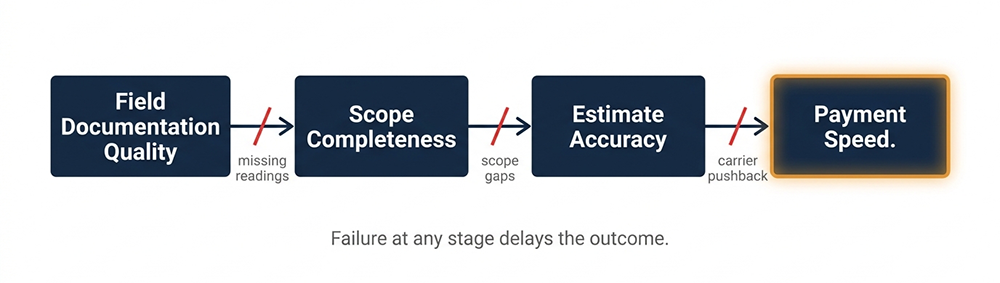
Slow payment in restoration is not primarily a billing problem or a carrier problem. It is a documentation workflow problem, and it starts on the first day of the job, not when you send the invoice.
At a Glance
Forty percent of restoration companies name getting paid as their biggest challenge, but most of the fixes they are trying start too late in the process. The documentation gaps that create supplement battles, adjuster disputes, and 60-day payment cycles were built into the job before anyone opened Xactimate. This post maps where the documentation chain breaks and what it costs, then shows what fixing it looks like using tools that are available right now, not someday.
The 2026 C&R/KnowHow State of the Industry report puts a number on it: 40.8% of restoration companies name getting paid as their biggest problem, up from 32.2% the year before. The industry's response has been predictable. Tighten the AR process. Call adjusters more. Invoice faster after closeout.
Those are reasonable instincts. They are also working on the wrong end of the problem.
The supplement battles, the carrier disputes, the 60-day payment cycles are not created at the billing stage. They are created earlier: when a scope gets built from incomplete field data, when a mold job moves into remediation before pre-test results have driven a complete documentation plan, when a fire loss walkthrough gets reconstructed from partial notes two days after the fact.
The restoration industry has no shortage of advice on getting paid faster. Most of it starts with the invoice. This post starts at the job site.
Getting Paid Has Four Problems. Each One Traces Back to Documentation.
The industry has named four contributors to the payment problem: TPA slow timelines, supplement approval delays, slow carriers, and internal AR process gaps. Most companies treat these as separate issues requiring separate fixes. They share a common upstream cause.